NICARAGUA
La Tierra de Lagos y Volcanes
 Nicaragua is the largest country in Central America with an area of 130,373 km2. The country is bordered by Honduras to the north and Costa Rica to the south. The Pacific Ocean lies to the west of the country, the Caribbean Sea to the east.

The eruptions of western Nicaragua's volcanoes, many of which are still active, have devastated the land but also have enriched it with layers of fertile ash. The geologic activity that produces vulcanism also breeds powerful earthquakes. Tremors occur regularly throughout the Pacific zone, and earthquakes have nearly destroyed the capital city, Managua, more than once.


The capital city of Nicaragua is Managua. Roughly one quarter of the nation's population lives in the Nicaraguan capital, making it the second largest city and metropolitan area in Central America following Guatemala city.
León is also the second largest city in Nicaragua.The city was abandoned in 1610, after an eruption of the Momotombo volcano , located only a couple miles away, which left extensive damage in the form of flooding from lake Managua. The inhabitants decided to move to its current location next to the Indigenous town of Subtiava. The ruins of the abandoned city are known as "León viejo" and were excavated in 1960.


 León has fine examples of Spanish Colonial architecture, including the grand Cathedral of the Assumption, built from 1706 to 1740, with two towers added in 1746 and 1779.

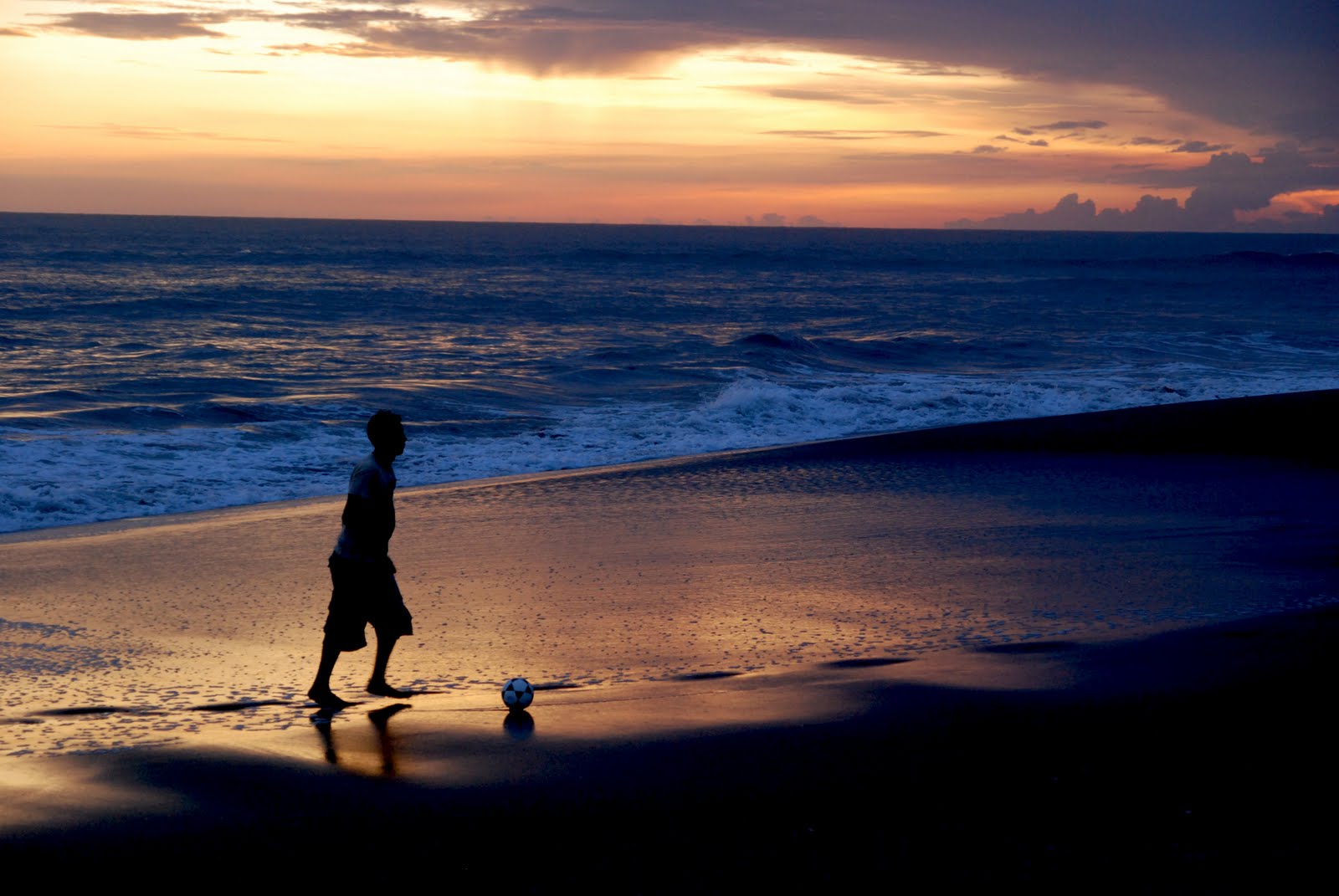
 Poneloya Beach, just outside Leon on the sunset.
On December 12, 2009, La Prensa, a Nicaraguan newspaper, reported that Nicaragua is currently the third to fifth most affected country from the climate change phenomena. Concerns have arisen in the country because there have been no specific policies set forth by the Nicaraguan government to cope with the phenomenon. However, various civil society organizations, and the government itself, have pioneered a few projects to combat the effects of climate change.


By most economic measures, Nicaragua is the second poorest country in the Americas. During the war between the US-backed Contras and the Marxist government of the Sandinistas in the 1980s, much of the country's infrastructure was damaged or destroyed. Inflation averaged 30% throughout the 1980s. After the United States imposed a trade embargo in 1985, which lasted 5 years, Nicaragua's inflation rate rose dramatically. The country is still a recovering economy and it continues to implement further reforms to improve profits for foreign businesses.


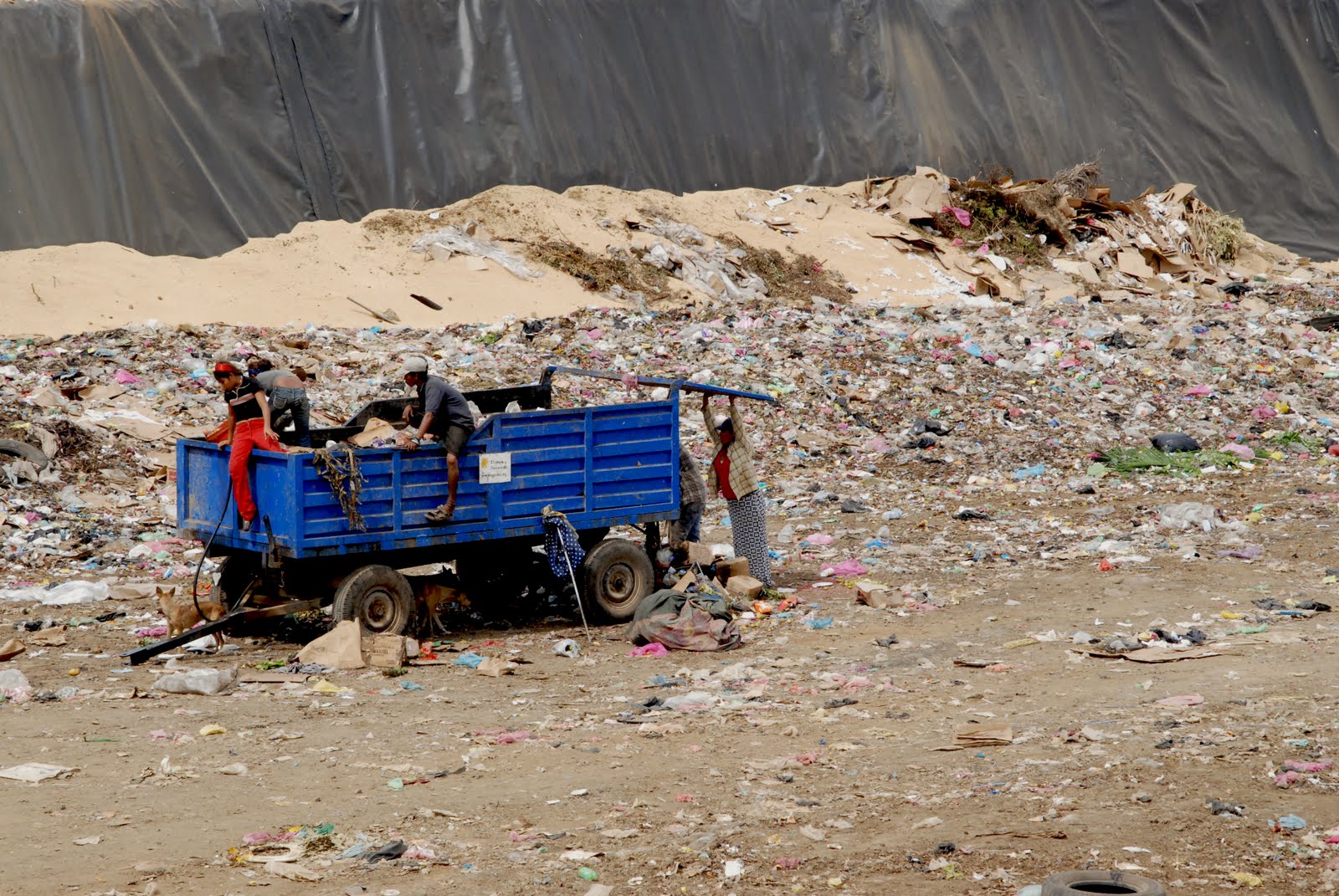
The new waste disposal in the state of Leon was built recently. The recycling is done by local people who are permitted to enter the disposal unit to collect plastic and metal which they can sell after for their living. The old disposal in Fortín was closed before a month.The new disposal was build with fund raising from abroad . The big pipes lead out the upcoming gases through the mountain of rubbish and can be used for accumulation of electricity.


Nicaragua achieved its independence from Spain and joined the Federal Republic of Central America in 1823, later leaving the Federal Republic in 1838. Nicaragua increasingly became a subject of substantial interest because of its geographic position for a canal that would service the Windward Passage. Roughly a century after operations of the Panama Canal commenced and one hundred and eighty five years after the initial plans for the Nicaraguan Canal waterway, the prospect of a Nicaraguan ecocanal has remained the subject of interest, with its construction in progress.


Nicaragua has experienced several military dictatorships, the longest one being the hereditary dictatorship of the Somoza family for much of the 20th century.In 1961 Carlos Fonseca, turned back to the historical figure of Sandino, and along with 2 others founded the Sandinista National Liberation Front (FSLN). After the 1972 earthquake and Somoza's brazen corruption, mishandling of relief, and refusal to rebuild Managua, the ranks of the Sandinistas were flooded with young disaffected Nicaraguans who no longer had anything to lose. While searching, for the so-called 'terrorists' the National Guard pillaged villages and imprisoned, tortured, raped, and executed hundreds of villagers.
The Sandinistas, supported by some of the populace, elements of the Catholic Church, and regional governments (including Panama, Mexico, Costa Rica, and Venezuela), took power in July 1979. Somoza fled the country and eventually ended up in Paraguay, where he was assassinated in September 1980.

To begin the task of establishing a new government, they created a Council (or junta) of National Reconstruction, made up of five members– Sandinista militants Daniel Ortega and Moises Hassan, novelist Sergio Ramirez Mercado (a member of "the Twelve"), businessman Alfonso Roebelo Callejas, and Violeta Barrios de Chamorro .
Multi-party democratic elections were held in 1990, which saw the defeat of the Sandinistas by a coalition of anti-Sandinista (from the left and right of the political spectrum) parties led by Violeta Chamorro. The defeat shocked the Sandinistas but the exit polling convinced Daniel Ortega that the election results were legitimate, and were instrumental in his decision to accept the vote of the people and step down rather than void the election. Chamorro's main contribution to Nicaragua was the disarmament of groups in the northern and central areas of the country. This provided stability that the country had lacked for over ten years. In subsequent elections in 1996 Daniel Ortega and the Sandinistas of the FSLN were again defeated, this time by candidates of the Constitutional Liberal Party (PLC).Daniel Ortega returned to the presidency with 37.99% of the vote during the elections in November 2006.

Before the general elections on 5 November 2006, the National Assembly passed a bill further restricting abortion in Nicaragua. President Enrique Bolanos supported this measure, and signed the bill into law on 17 November 2006 . As a result Nicaragua is one of four countries in the world where abortion is illegal with no exceptions, along with Chile, Malta and El Salvador along with Vatican City. No exceptions are made neither in case of rape even if the committer is family member nor in case of serious life thread for the pregnant mother.


In front of the orphanage in Leon children are waiting for the promised pinatas. Pinatas are puppets made out of rubber balloons glued with colorful paper and filled with candies from inside. The children had to hit the pinatas with bondage on their eyes. When the candies fell down the children ran like crazy to collect the sweets.


Painting on the wall in the centre of Leon. The danger of infection with HIV (SIDA) is also a reality for the local community in Leon. One local organization supports infected with HIV patients to cope with the prejudice in the society and to continue being self-contained part of the social life. Other organizations try to rise the awareness about AIDS in the local communities by organizing educational courses in schools and other institutions. Blood examination for HIV are offered for free in some hospitals and thus more permissible for lower class in the last years. But the conservative and often religious stereotypes sometimes might be still an obstacle for many people. Especially young women confess that they still doubt to use precautions or search medical aid scared by the consequences of stigmatization or accusations.
.


Nicaraguan culture has strong folklore, music and religious traditions, deeply influenced by European culture but enriched with Amerindian sounds and flavors. Nicaraguan literature has historically been an important source of poetry in the Spanish-speaking world, with internationally renowned contributors such as Ruben Dario who is regarded as the most important literary figure in Nicaragua.


 Handcrafter swiftly forms decorative figures out of clay.When they are dry enough she will color them with special paint and shiny stains.

 Nicaraguan music is a mixture of indigenous and European, especially Spanish, influences. Musical instruments include the marimba and others common across Central America.
 Bachata has also gained popularity in Nicaragua. Combinations of styles from the Dominican Republic and the United States can be found throughout the country. As a whole music is very significant part of the daily life of the locals.Wherever you will go you can hear loud radio tuned on a station with the latest reaggeton hits.

Nicaragua's rum Flor de Caña is renowned as among the best in Latin America. Other local rums like the Perla and the Plata are much cheaper. Trying the local rum is an almost compulsory especially if you the want to jump in the lifestyle of an ordinary Nicaraguan.


 Gallo pinto, Nicaragua's national dish , is made with white rice and red beans that are cooked separately and then fried together. Many of Nicaragua's dishes include indigenous fruits and vegetables such as jocote, mango, papaya, tamarindo, pipian, banana, avocado, yuca, and herbs such as cilantro, oregano and achiote.Nicaraguans also have been known to eat guinea pigs and tapirs, iguanas, turtle eggs, armadillos and boas but as all these creatures are threatened with extinction, efforts are being made to curb this tendency.

Youth Exchange
Hamburg-Leon-Hamburg
The youth exchange between Hamburg and León takes place since 1990. Is part of a long partnership between the cities of Hamburg (Germany) and León (Nicaragua).
Every two years one group of young people takes off from Hamburg to spend 5 weeks in the partner organization in León. This weeks are full of adventures, new ideas and friendships . During the exchange the participants take part in organized program. It includes seminars about culture and language, debates about different social and ecological issues, meetings with local organizations and excursions. The participants from Germany and Nicaragua spent their daily time together , exchange ideas and point of views develop common projects together.
For more information check http://agfj-hh.de/nicaragua-blog/
 Nicaragua is the largest country in Central America with an area of 130,373 km2. The country is bordered by Honduras to the north and Costa Rica to the south. The Pacific Ocean lies to the west of the country, the Caribbean Sea to the east.


 León has fine examples of Spanish Colonial architecture, including the grand Cathedral of the Assumption, built from 1706 to 1740, with two towers added in 1746 and 1779.




 Nicaraguan music is a mixture of indigenous and European, especially Spanish, influences. Musical instruments include the marimba and others common across Central America.


